
Special Educational Needs
Wood Field Primary School is ambitious for all our pupils, and we believe that there is no ceiling on what can be achieved by anyone, regardless of their circumstances or background. We are committed to providing a supportive and inclusive learning environment, giving every young person the opportunity to fulfil their potential now, and in the future.
The leaders at Wood Field Primary School are leaders for all pupils, enabling our teachers to be teachers of all pupils. Wood Field Primary School is committed to distributed leadership to secure the best possible provision and outcomes for pupils with special educational needs. We have the same ambition for all our pupils, and recognise the importance and impact of prioritising our responsibilities to pupils with special educational needs.
We work in partnership with pupils and their families in identifying and providing for special educational needs. Where appropriate, we also work in partnership with other agencies. We recognise the importance of communication being inclusive, accessible and culturally sensitive to achieve effective partnership working.
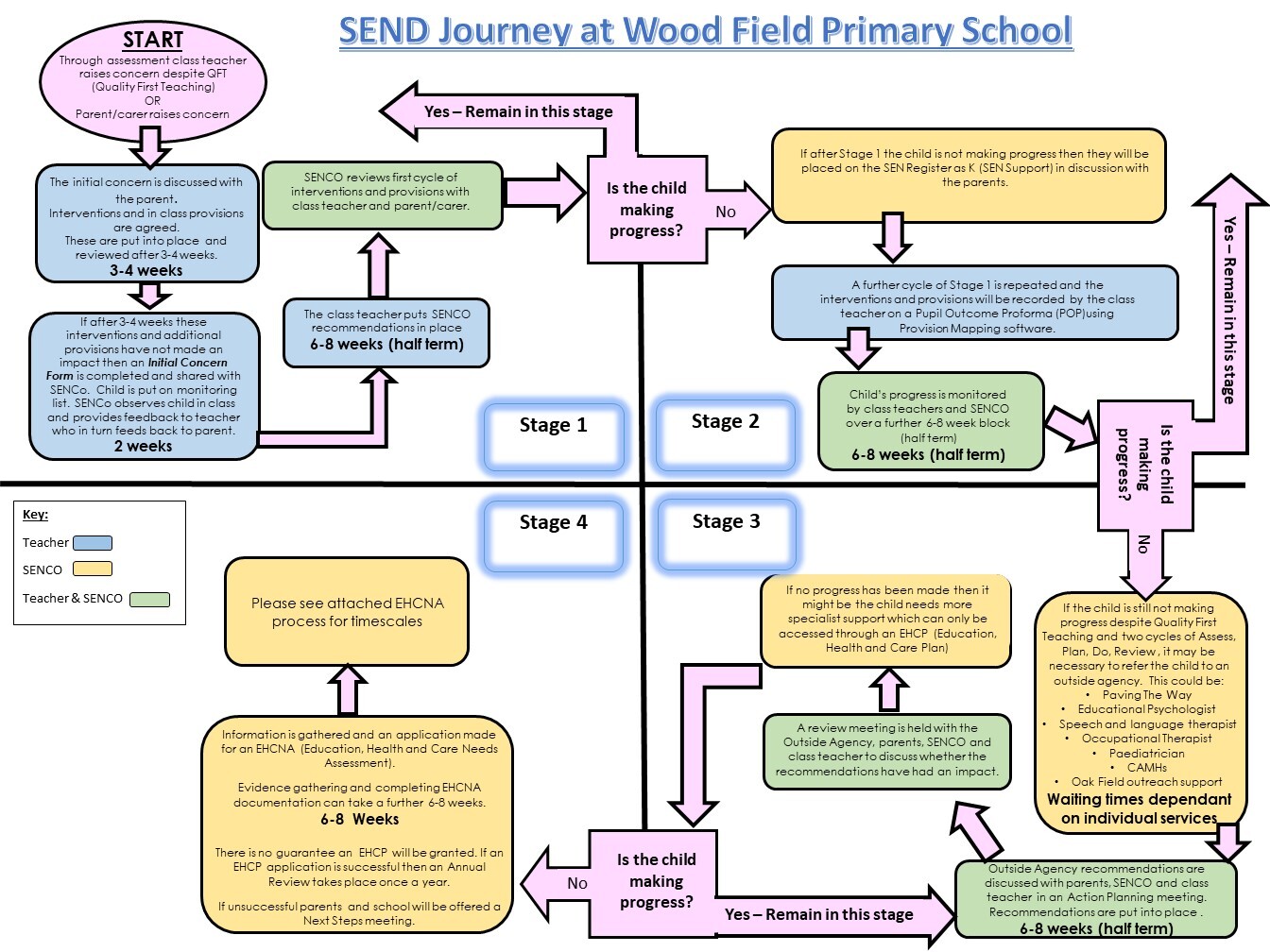
Graduated response diagram
What does it mean to have a Special Educational Need?
A pupil has SEN if they have a learning difficulty or disability that requires special educational provision to be made for them.
They have a learning difficulty or disability if they have:
-
A significantly greater difficulty in learning than most others of the same age; or
-
A disability that prevents or hinders them from making use of facilities of a kind generally provided for others of the same age in mainstream schools.
Special educational provision is educational or training provision that is additional to, or different from, that made generally for other children or young people of the same age by mainstream schools.
At our school, special educational provision means tailoring our environment so every child can thrive, participate, and learn alongside their peers. To ensure students are ready for learning, we proactively use visual timetables, sensory breaks, and morning check-ins with key adults. We maximize opportunities for children to learn and socialise alongside their peers through targeted, proactive support and appropriate curriculum adaptations. We systematically scaffold learning within the classroom to break down tasks, ensuring all pupils can fully access the curriculum content. Every child's individual needs and required adjustments are detailed in their Pupil Passport to ensure consistent teaching strategies are always utilised.
We utilise dedicated regulation rooms to provide high-needs pupils with targeted support, helping them safely regulate and successfully integrate into mainstream classes.
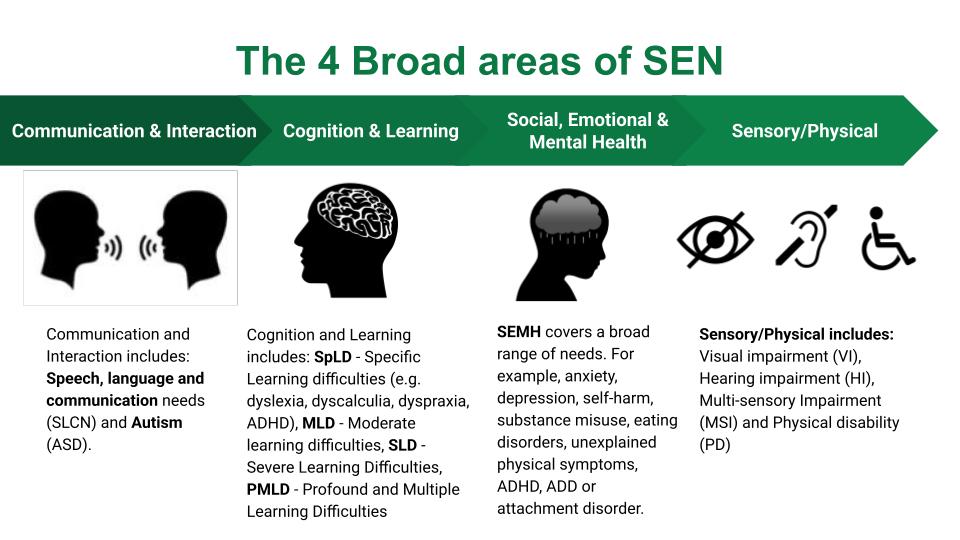
Our SEND Team
|
Miss Allan – SENDCo
|
"We believe every student deserves a school experience that inspires them to aim high, providing the tailored support they need to become confident, successful, and independent lifelong learners. By working closely with families and adapting our environment, we empower all children to thrive academically and socially alongside their peers.” |
|
Miss Tribe – Assistant SENDCo
|
"Belonging and high expectations go hand-in-hand for our SEND learners. By fostering a space that balances care with ambition, we empower our students to overcome barriers, excel academically, and realize their full potential." |
|
Miss Lungley – SENDCo Assistant
|
“Every student has the potential to succeed when given the right support, by ensuring that all children, regardless of their needs, have access to the resources and support they require to thrive.” |


Identification and assessment of children with SEND
We will assess each pupil’s current skills and levels of attainment on entry, which will build on previous settings and Key Stages, where appropriate. Class teachers will make regular assessments of progress for all pupils and identify those whose progress:
-
Is significantly slower than that of their peers starting from the same baseline.
-
Fails to match or better the child’s previous rate of progress.
-
Fails to close the attainment gap between the child and their peers.
-
Widens the attainment gap.
This may include progress in areas other than attainment, for example, personal, social and emotional development.
Slow progress and low attainment will not automatically mean a pupil is recorded as having SEN. Other barriers to learning will also be considered.
A referral system is also in place for teachers to raise concerns with the SENDCo if they feel that a pupil may require support which is different from, or additional to, that which is delivered as part of the universal offer. As part of the graduated approach, any referral includes strategies that the teacher has already implemented and their impact.
Parents/carers can also raise concerns either with the class teacher or by contacting the school SENDCo.
When deciding whether special educational provision is required, we will start with the desired outcomes, including the expected progress and attainment, and the views and the wishes of the pupil and their parents. We will use this to determine the support that is needed and whether we can provide it by adapting our core offer, or whether something additional is needed.
We will have an early discussion with the pupil and their parents when identifying whether they need special educational provision. These conversations will make sure that:
-
Everyone develops a good understanding of the pupil’s areas of strength and difficulty.
-
We take into account the parents’ concerns.
-
Everyone understands the agreed outcomes sought for the child.
-
Everyone is clear on what the next steps are.
Notes of these early discussions will be added to the pupil’s record and given to their parents.
We will formally notify parents when it is decided that a pupil will receive SEN support.
We will follow the graduated approach and the four-part cycle of assess, plan, do, review.
The class teacher will work with the SENDCo to carry out a clear analysis of the pupil’s needs. This will draw on:
-
The teacher’s assessment and experience of the pupil
-
Their previous progress and attainment and behaviour
-
Other teachers’ assessments, where relevant
-
The individual’s development in comparison to their peers and national data
-
The views and experience of parents
-
The pupil’s own views
-
Advice from external support services, if relevant
-
The assessment will be reviewed regularly.
All teachers and support staff who work with the pupil will be made aware of their needs, the outcomes sought, the support provided, and any teaching strategies or approaches that are required. We will regularly review the effectiveness of the support and interventions and their impact on the pupil’s progress.
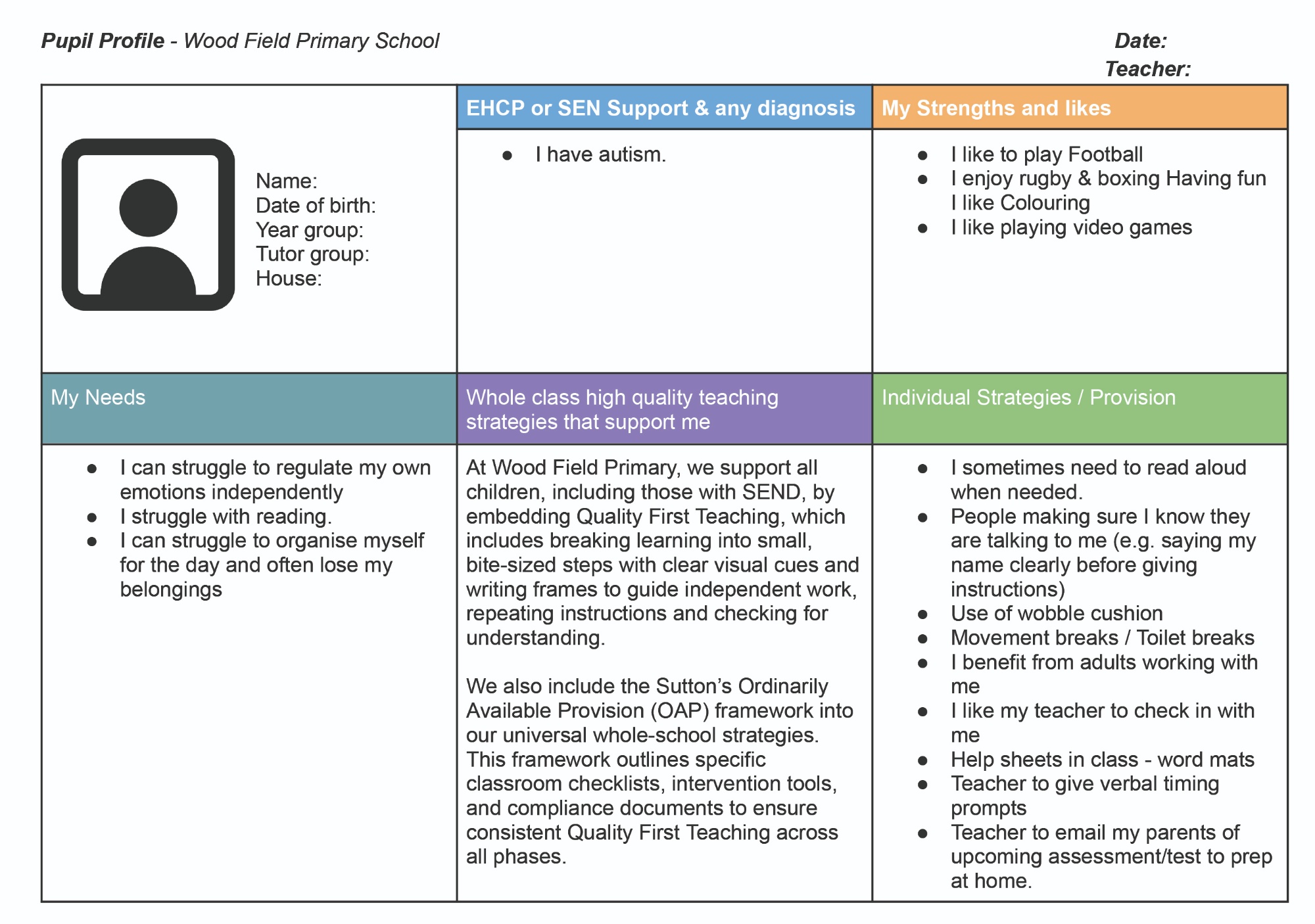
Pupil Passport
A pupil passport is a regularly reviewed document that contains the needs, strengths and individual strategies for every student with an EHCP or on SEN Support. These are developed in partnership with pupils and their parents/carers. Where appropriate, they might also include strategies recommended by other professionals.
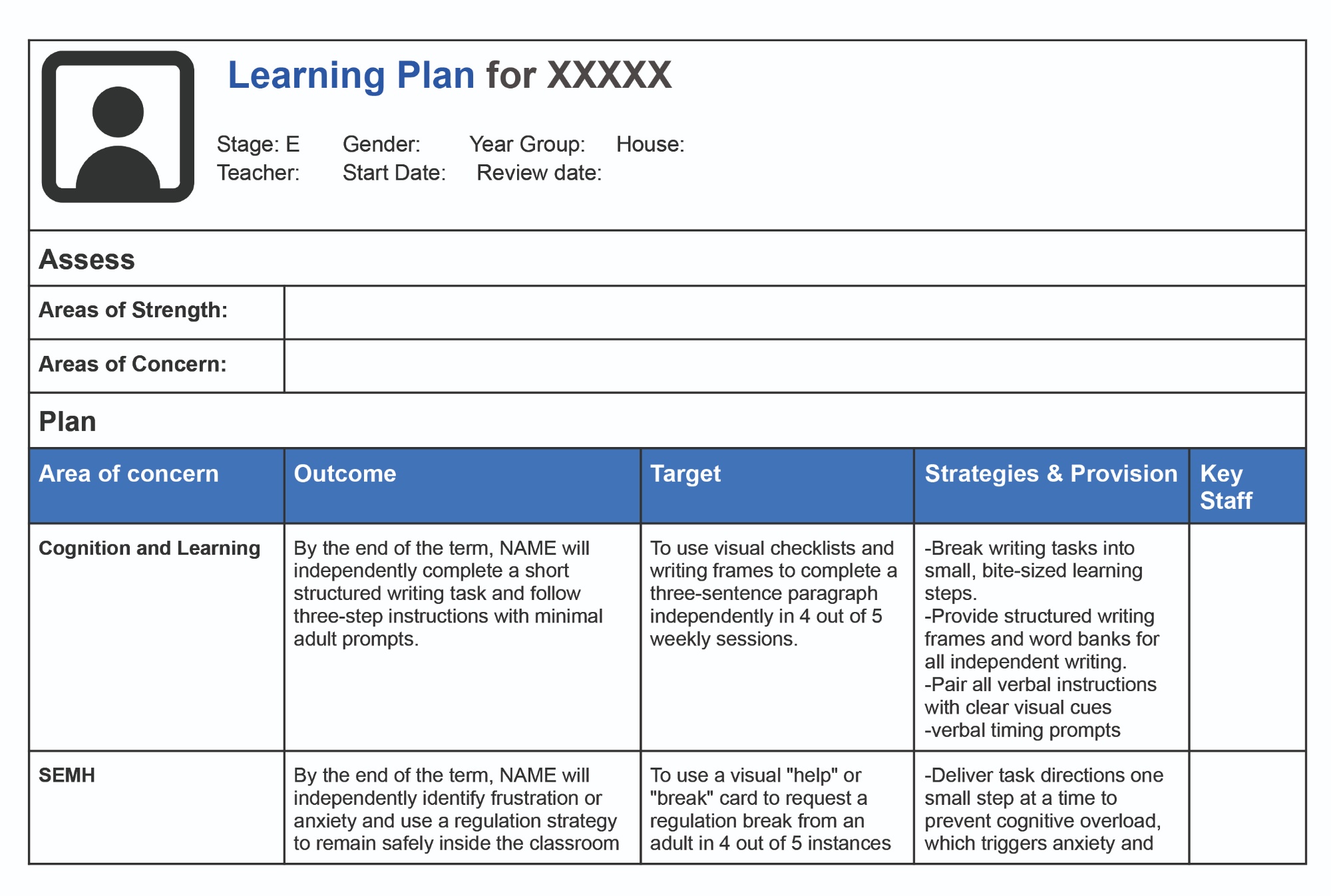
Learning Plan
Some pupils who require more specialised support will have Individualised learning plans to complement pupil passports. For example, an individualised learning plan will be used to:
-
Track progress against long-term outcomes in Educational, Health and Care Plans (EHCNAs) for pupils working below age-related expectations.
-
Inform medium-term and daily curriculum planning and provision where children are accessing adapted curriculum pathways.
-
Inform intervention planning.
Universal provision – high quality teaching
At Wood Field Primary School, we believe that high-quality teaching is the first and most crucial step in responding to pupils who have additional needs.
-
Teacher accountability: our classroom teachers are directly responsible and accountable for the progress, well-being, and development of every pupil in their class.
-
Universal strategies: to ensure all children can access learning, our staff regularly utilise high-quality, inclusive teaching strategies, including:
-
Modelling tasks clearly before independent work.
-
Chunking information into smaller, manageable steps.
-
Repeating instructions to reinforce key details.
-
Checking for understanding systematically throughout lessons.
-
Allowing processing time, so pupils can confidently formulate responses.
-
Targeted support
We proactively adapt our environment, teaching styles, and resources to remove barriers and ensure equity of access across the curriculum. When pupils require provision that is additional to universal teaching, we implement targeted adaptations and small-group interventions, including:
-
Curriculum and environment adaptations: tailoring lesson content, delivery methods, and groupings (including 1:1 or small-group work). We adapt our learning resources and staffing dynamically to meet student needs.
-
Classroom learning aids: providing immediate access to recommended assistive tools, including laptops, coloured overlays, custom visual timetables, and enlarged fonts.
-
Communication adaptations: giving extended processing times, reading instructions aloud, and pre-teaching key vocabulary before introducing main lesson themes.
-
Targeted school led interventions:
-
Nurture Provision and access to Nurture groups
-
Small group classes
-
Pre-teaching of curriculum content
-
1:1 reading and Reciprocal Reading
-
Fine motor support
-
Specialist support
For pupils with complex or long-term needs – including those with an Education, Health and Care Plan (EHCP) – we deliver highly specific interventions and collaborate with a multidisciplinary network of external agencies. For pupils with an EHCP, all interventions and provisions are delivered in strict alignment with the mandates listed within their plan.
-
Specialist intervention:
-
Social, Emotional and Mental Health: ELSA (Emotional Literacy Support Assistant) and zones of regulation.
-
Communication and physical support: speech and language therapy, therapy, colourful semantics, and occupational therapy.
-
-
External agency partnerships: we work with specialist professionals to secure expert advice, diagnostics, and therapeutic care, including:
-
Speech and language therapists, occupational therapists, and Physiotherapists
-
Educational psychologists, CAMHS, and behaviour support teams
-
Physical and sensory support teams and the Sensory Impairment Service
-
COGNUS SEN team, Playwise, Paving the Way, and the Children with Disability Team
-
Staff training
We prioritise professional development for all staff so that they have the necessary skills and strategies to be able to meet the needs of all children. Where more specific professional development requirements are identified, additional training will be delivered either to all or key members of staff.
Our SENDCo is new to the role, having completed The National Award for SEN Coordination in 2024, and is a trained Nurture practitioner. She has been teaching since 2016 and has worked across key stages. They are allocated three days a week to manage SEN provision.
We have teaching assistants and higher level teaching assistants (HLTAs) who are trained to deliver SEN provision. Our Nurture practitioner is trained by the Educational psychology service in precision teaching, cued spelling, we are readers, reciprocal reading, colourful semantics, paired reading, therapeutic writing, reader's theatre and understanding ASD diagnosis.
Useful links
Teacher Handbook: SEND
With contributions from specialists across the sector, the handbook is a comprehensive resource for teachers and parents to use over time. It brings together practical examples of high-quality teaching – placing focus on removing barriers to learning, getting to know and understand individual learners, and bringing to life the graduated approach. To access this free resource, click on the link below and sign up to Whole School SEND:
Whole School SEND Online CPD Units
Free, flexible online learning to help develop inclusive practice.
Other useful links
Link to the SEN Information Report:
https://www.woodfieldprimary.com/content/?pid=25&contentid=1
Link to the Local Offer:
https://suttoninformationhub.org.uk/pages/send-local-offer